
A live cohort for senior pastors and church staff
Preaching, Leadership, and AI
Your people are already using it. The question is whether you can lead them through it.
6 live sessions · 90 minutes · Thursdays 1:00–2:30 PM ET · Begins [DATE] · 24 seats
Led by Shane Sooter and Phil Russell, PhD · Endorsed by Bob Russell
Pastors, you didn’t ask for this one either.
You’ve got a sermon due Sunday and a staff member who’s clearly using ChatGPT for the newsletter and hasn’t mentioned it. Somebody in your congregation asked what you think about their teenager talking to a chatbot at 2 a.m., and you gave an answer you weren’t sure of. An elder forwarded you an article. You’ve probably tried it yourself — late, tired, curious — and felt something you couldn’t quite name afterward.
Here’s what nobody’s saying out loud: most pastors are figuring this out alone, quietly, without telling anyone. There’s no policy. There’s no framework. There’s just you, a blinking cursor, and a growing sense that this matters more than you have time to think about.

Ever noticed that the people in your pews are further down this road than you are?
The research is uncomfortable, and you should see it.
44% vs 16%
Practicing Christians who use AI often or very often, versus pastors who do.
34%
Of practicing Christians say spiritual advice from AI is as trustworthy as advice from a pastor. Among Millennials, 40%.
1 in 3 vs 12%
Practicing Christians who want their pastor’s guidance on AI, versus pastors who feel ready to give it.
64% vs 5%
Church leaders who say their church should have an AI policy, versus those who have one.
Barna Group / Gloo, November–December 2025. Pastors n=442, U.S. adults n=1,514.
That last pair is the whole problem in two numbers. It isn’t that pastors are behind on technology. It’s that the people you shepherd are already forming their spiritual habits around a tool you haven’t had time to think carefully about — and they’re waiting on you.
What this actually is
Six live sessions
Thursdays, 1:00–2:30 PM ET, beginning [DATE]. Ninety minutes: teaching, breakout groups with 4–5 other pastors, and open discussion.
Twenty-four seats
Not for scarcity’s sake — past that, breakout groups stop being conversations and start being audiences.
About an hour between sessions
Real, practical, applied to your actual church. Not homework for its own sake.
Every session recorded
You will miss one. Everyone does.
You leave with three things: a working setup that produces output in your voice, a written AI policy your elders can actually approve, and a clear answer for the person who asks you what you think.
The Six Sessions

Week 1
What this actually is, and what it isn’t.
No hype, no doom. What these tools genuinely do well, what they’re bad at, and why your first attempt produced something that sounded like a greeting card. We’ll look at the real research together — including the parts that argue against using it at all.
You’ll leave with: an honest baseline, and permission to still be skeptical.

Week 2
Getting your own voice out of it.
Eighty-four percent of pastors say AI output needs heavy editing. That’s almost always a setup problem, not a tool problem. We’ll build your corpus — your manuscripts, your transcripts, your theological frame — once, so that everything after sounds like you instead of like nobody.
You’ll leave with: a configured workspace that knows how you talk and what you believe.
Week 3
Where the line is.
The hardest session. Sermon preparation, attribution, and plagiarism. What crosses the line, what doesn’t, and how to tell the difference under deadline pressure. We’ll work the actual cases.
You’ll leave with: a drawn line you can defend out loud to your elders.

Week 4
Write your church’s AI policy.
Not discuss one. Write one. We’ll work from three real models — including the cleanest denominational rule-set anyone has published — and you’ll draft yours in the session, covering counseling notes, prayer requests, giving records, staff use, and children’s ministry data.
You’ll leave with: a document ready to take to your board.

Week 5
Your people and their machines.
The member in a relationship with a chatbot. The teenager taking things to an AI that she won’t take to her parents. The deepfake of you asking your congregation for money — which is happening, right now, to pastors with a public voice. This is pastoral care, not tech support.
You’ll leave with: a protocol for the conversations you’re already being asked to have.
Week 6
Leading out loud.
Teaching your congregation on this. Telling your staff what you do and don’t use. Having the disclosure conversation before someone else has it for you. What the next twelve months probably look like.
You’ll leave with: a plan, and a room full of people who made the same one.
About the ethics — read this part carefully
Most AI training for churches will teach you prompts and call it a day. This cohort is built on the conviction that the harder question comes first.
Should you tell your congregation? We’ll show you both halves of that. The Brentwood Statement on AI and Christian Ministry — released by Lifeway and SBC leaders in June 2026 — sets a real transparency duty: “If AI cannot be used with transparency, it might be because that practice could cause another to stumble and doubt the minister’s integrity.”
And we’ll show you what the research says disclosure costs. In a 13-experiment study of over 4,000 people, trust ratings landed at 4.02 when AI use went undisclosed, 3.15 when it was voluntarily disclosed — and 2.49 when someone else exposed it. There is no free option. Transparency has a price, and being caught has a much steeper one.
We’re not going to resolve that for you. We’re going to hand you both halves, put you in a room with peers facing the same call, and let you decide in front of people who will hold you to it.
We’ll also deal honestly with what these tools get wrong theologically. A peer-reviewed study published this year tested frontier models against 576 doctrinal claims across eleven traditions and found they flatten denominational distinctives — scoring 86% precision but only 56% recall, with the worst failures on sacraments and eschatology. Meaning: what’s on the screen mostly looks right. What’s missing is the problem. You cannot catch that by reading carefully. You have to know it’s happening.
Who’s leading it

Shane Sooter
Twenty-five years at the intersection of leadership, creativity, and faith. Former Creative Arts Director at Southeast Christian Church. Founder of City on a Hill Productions. Led Rare Bird Productions for thirteen years — over 100 television episodes and two feature films written, directed, or produced. Now consults with ministries and media organizations on AI adoption across entire organizations, not just pilot projects.
“I’m not here to sell you on AI. I’ve spent my career helping pastors tell the truth compellingly, and I think this technology is going to make that harder before it makes it easier. I’d rather you walk in with your eyes open than stumble in late.”

Phil Russell, PhD
Spent decades in law enforcement command, making decisions with consequences that couldn’t be undone. Now holds a PhD in Leadership Studies and has spent twenty years mentoring pastors. He learned leadership from his father, Bob Russell — the man John Maxwell called “a leader of leaders.”
“Every generation of pastors gets handed something nobody trained them for. This is ours. The question isn’t whether you’ll use these tools. It’s whether you’ll have thought hard enough about it to answer for how you did.”
Together, Shane and Phil have led pastors through leadership cohorts built on the same conviction: that real change happens in a room of peers over time, not in a conference hall over a weekend.
This cohort is for you if…
- You’ve been asked about AI by someone in your church and didn’t love your answer
- You’re already using it a little and haven’t told anyone
- Your staff are using it and there’s no policy, no guidance, and no conversation
- You want to think about this carefully but have no time to do it from scratch
- You’d rather work it out with peers than read another article
- You lead a church of 50 or 5,000 — both work here
This cohort is not for you if…
- You want to be told AI is spiritually harmless. We don’t believe that and we won’t say it.
- You’re looking for someone to write your sermons. Don’t come.
- You want a tool tutorial. There are good ones for $27 and we’ll point you to them.
- You’ve already decided and aren’t open to being wrong in either direction.
Founding Cohort Pricing
This is the first run. The price reflects that, and it won’t repeat.
If this matters to you and the money genuinely isn’t there — for you or your church — write to us. We’ll figure something out. We always have.
30-Day Money Back Guarantee
Come to the first two live sessions. If it isn’t what you needed, tell us within 30 days and we’ll refund you in full. No explanation required.
Questions pastors are actually asking
I'm already underwater. What's the real time cost?
Isn't this just outsourcing the Holy Spirit?
What do I tell my elders?
I'm not technical. Will I be lost?
How is this different from free videos on YouTube?
What if I miss a session?
Who else will be in the room?
A word from Bob Russell

“Pastors, I’ve been watching this AI conversation from the outside, and I’ll tell you what concerns me. It isn’t the technology. It’s that so many of you are wrestling with it alone, with nobody to talk to about what’s appropriate and what isn’t.
In forty years at Southeast, the decisions that cost me were the ones I made in isolation. The ones that held up were the ones I made with people who loved me enough to push back.
I don’t fully understand these tools. But what I understand is that you’re being asked questions you don’t have answers for, by people who trust you, and that’s a heavy place to stand.
I believe in Phil and Shane. I’ve watched them lead pastors well. If this is a conversation you know you need to have, I’d have it with them, and I’d have it with peers who are carrying the same weight.
Go get some clarity. Your church needs you thinking clearly about this.”
— Bob Russell, Founding Pastor, Southeast Christian Church
Register Today
Twenty-four seats. Begins [DATE].
You’re going to have to lead your people through this whether you’re ready or not. The only question is whether you do it having thought about it, with peers who thought about it alongside you — or alone, at 11 p.m., hoping nobody asks.
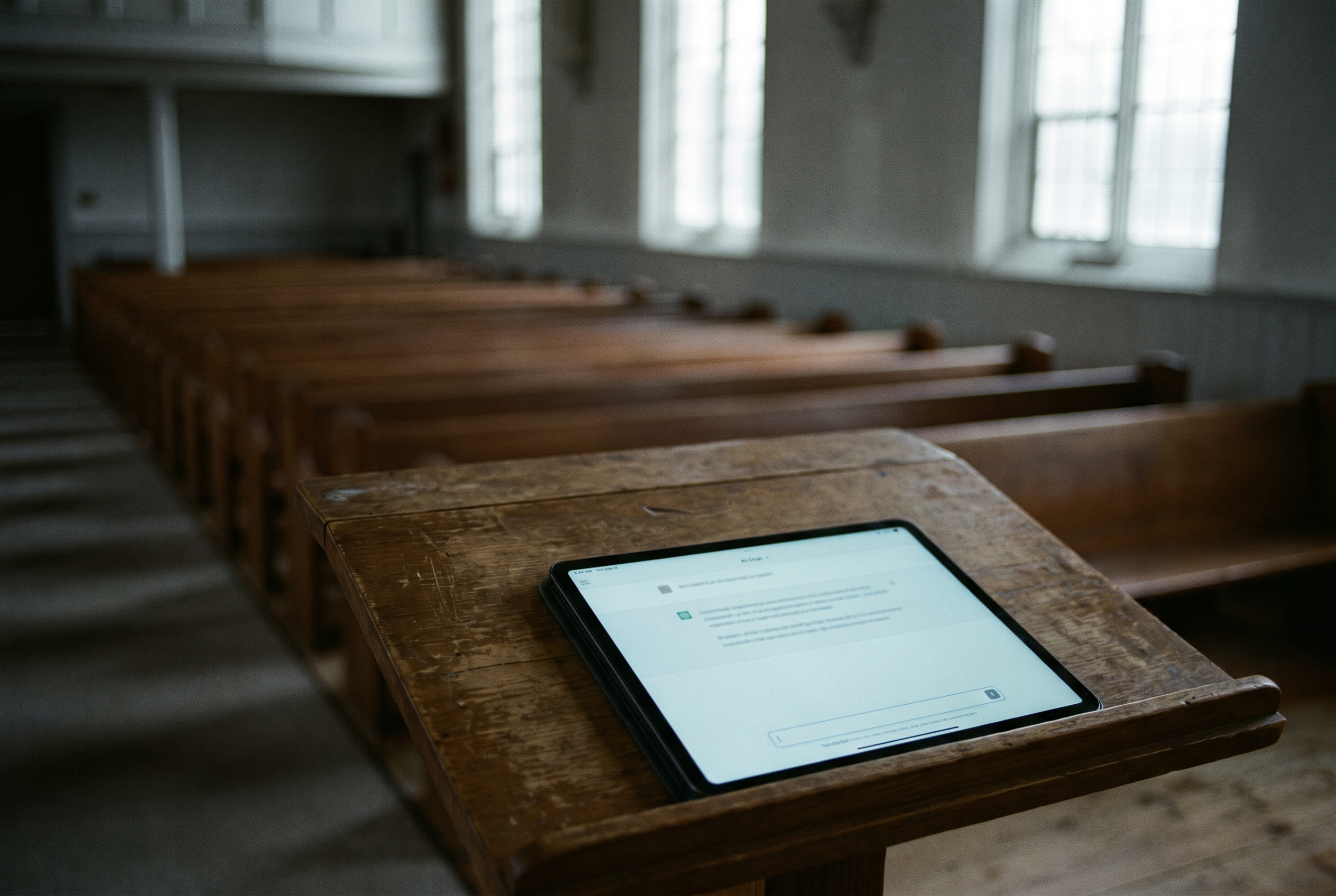
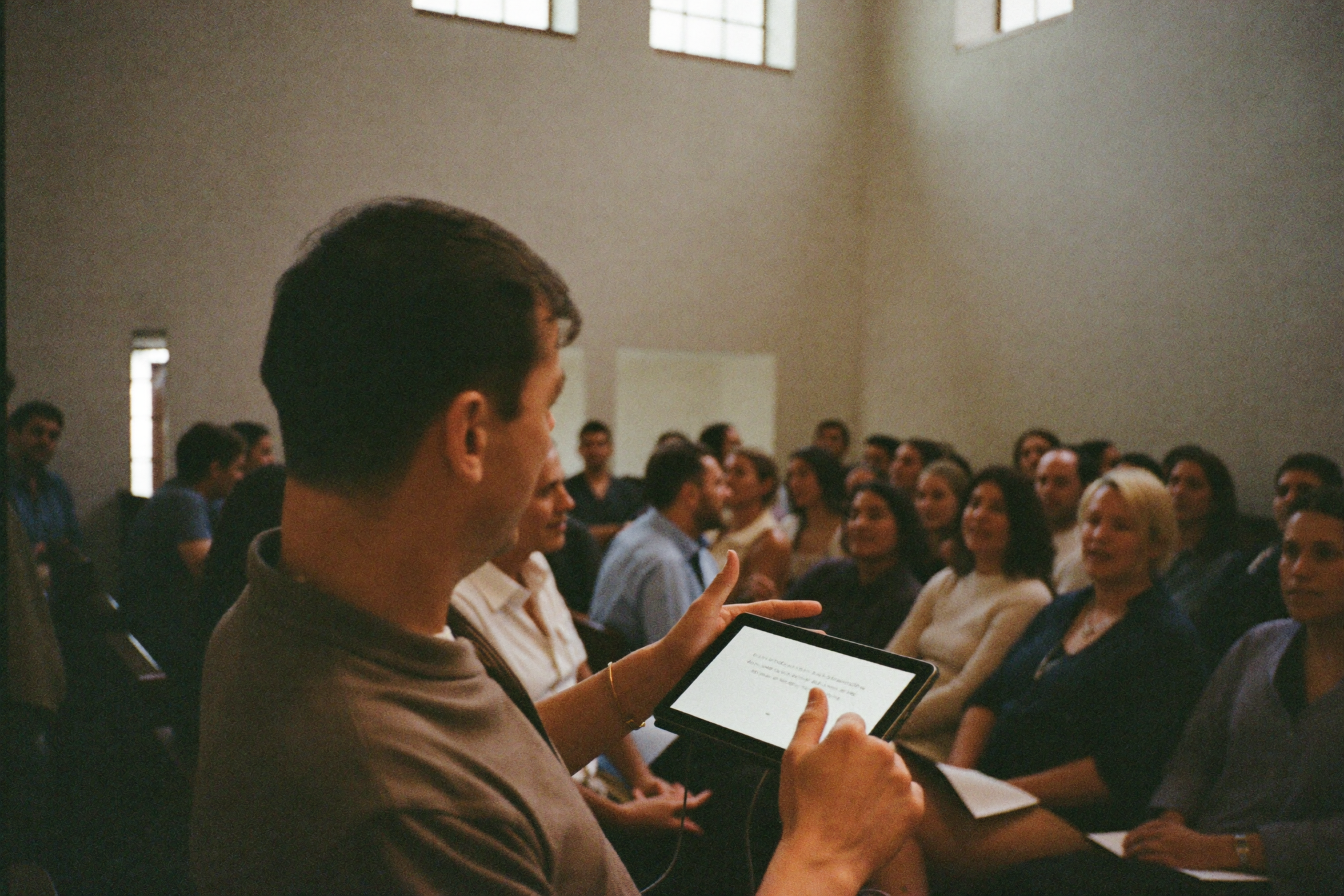
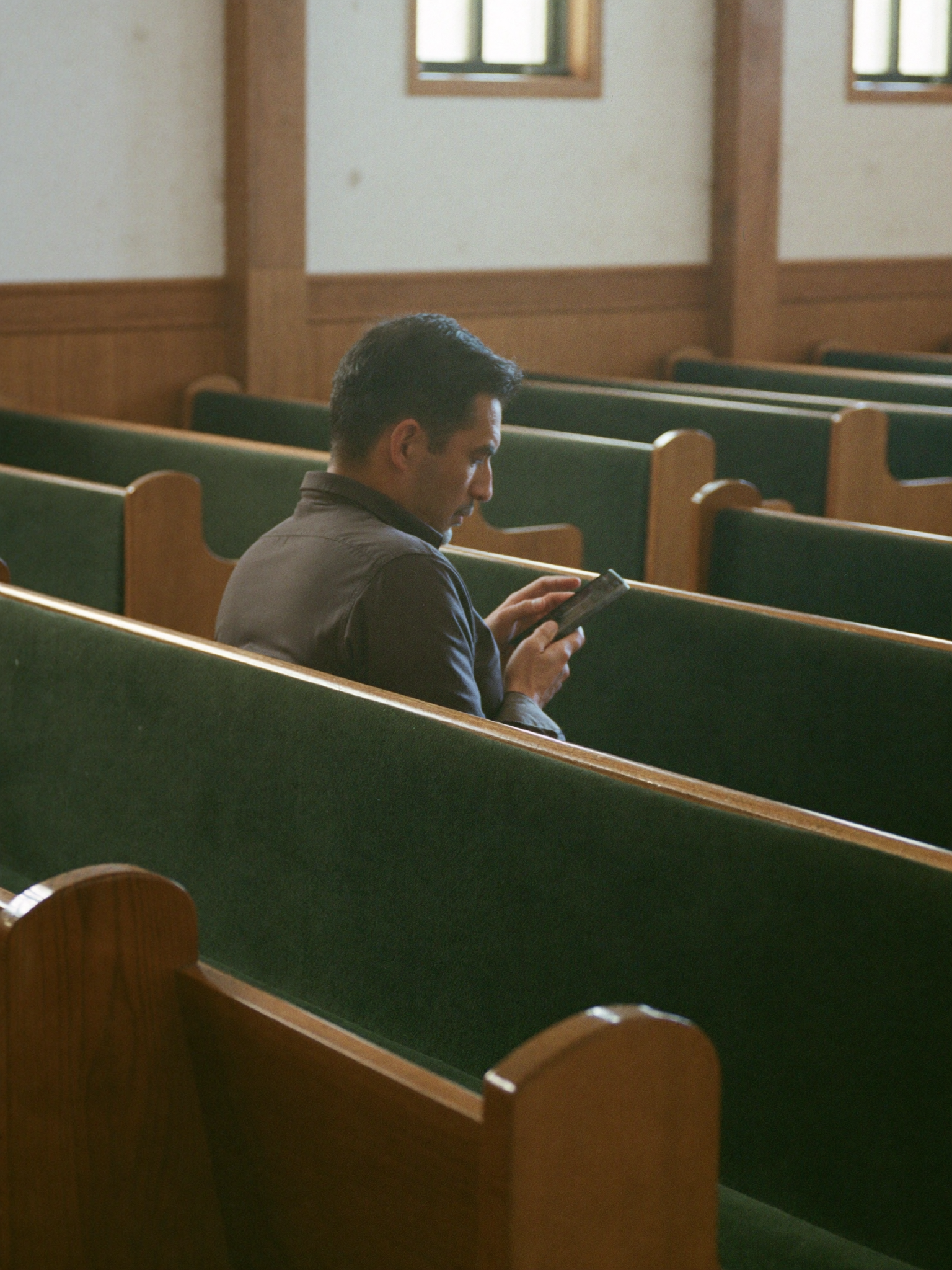
Every photograph on this page was generated with AI. We think you should know that.